

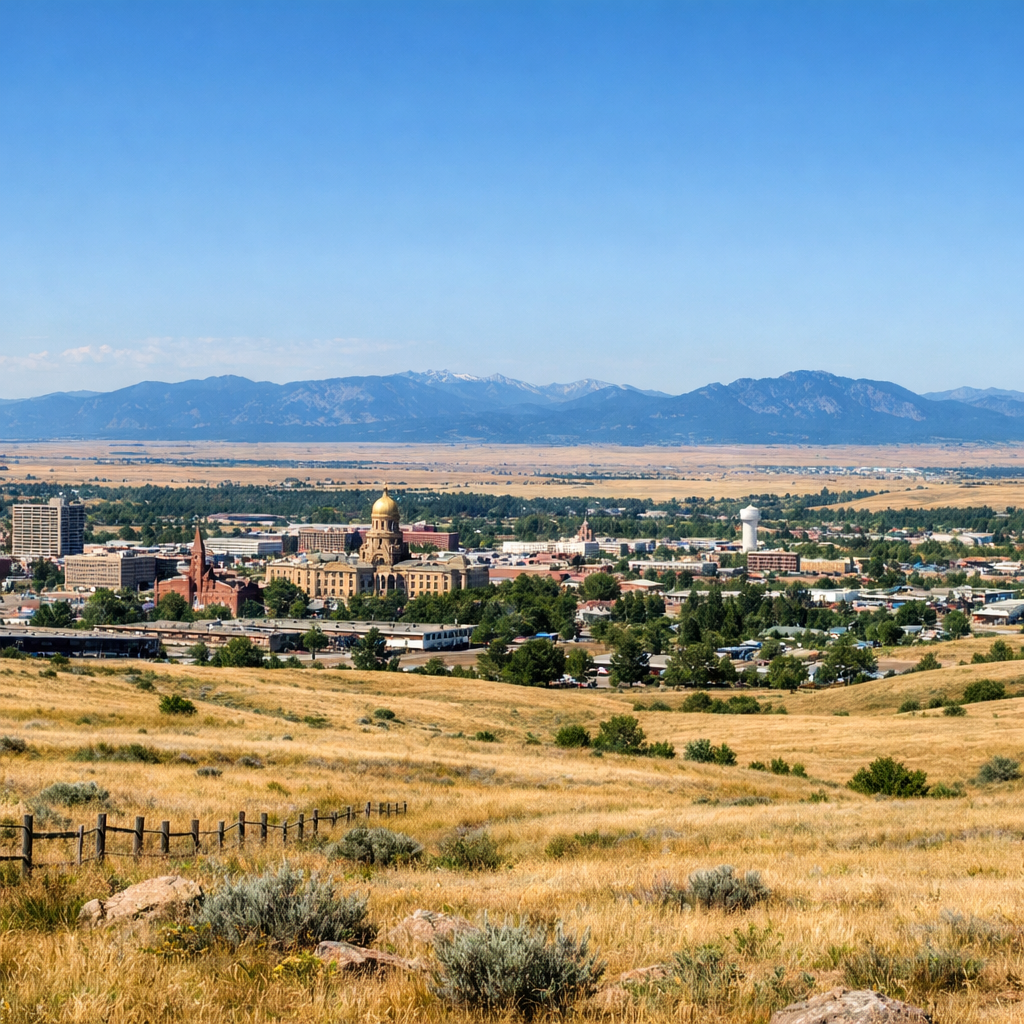
Cheyenne, Wyoming, situated at an elevation of over 6,000 feet, experiences a semi-arid continental climate characterized by distinct seasonal variations. Understanding these patterns is essential for residents and visitors alike.
Seasonal Weather Patterns
Winter
Winters in Cheyenne are cold and moderately long, with average temperatures around 27°F (-3°C). Snowfall typically begins in November and continues through March, averaging approximately 51 inches annually. Despite the cold, the region often experiences Chinook winds—warm, moist winds from the sea—that can lead to rapid temperature increases and snowmelt.
Spring
Spring brings a gradual warming trend, with average temperatures rising from the mid-40s°F (7°C) in March to the mid-60s°F (18°C) by May. This season is also the wettest, with May receiving the highest average precipitation of about 2.95 inches (75mm). Thunderstorms are common during this period, occasionally bringing hail and strong winds.
Summer
Summers are warm and mostly clear, with average high temperatures peaking around 82°F (28°C) in July. The season is relatively dry, with occasional afternoon thunderstorms. The low humidity and elevation contribute to significant temperature fluctuations between day and night.
Autumn
Autumn sees a gradual cooling, with temperatures dropping from the mid-70s°F (24°C) in September to the mid-50s°F (13°C) by November. Precipitation decreases, and the region often experiences clear skies and mild conditions, making it a pleasant time for outdoor activities.
Environmental Challenges
Air Quality
Wyoming’s development in the oil and gas industry has led to increased air pollution, transforming what was once some of the cleanest air in the nation to some of the most polluted. This shift poses health risks and affects the overall quality of life in the region.
Wildlife Conservation
The state faces challenges in wildlife conservation, including the extirpation of species like the gray wolf and threats to the greater sage grouse due to natural gas extraction. Efforts are ongoing to address these issues and restore ecological balance.
Understanding Cheyenne’s climate and environmental challenges is crucial for fostering a sustainable future for the community.