

By Logan Rodriguez
High Plains Climate 101
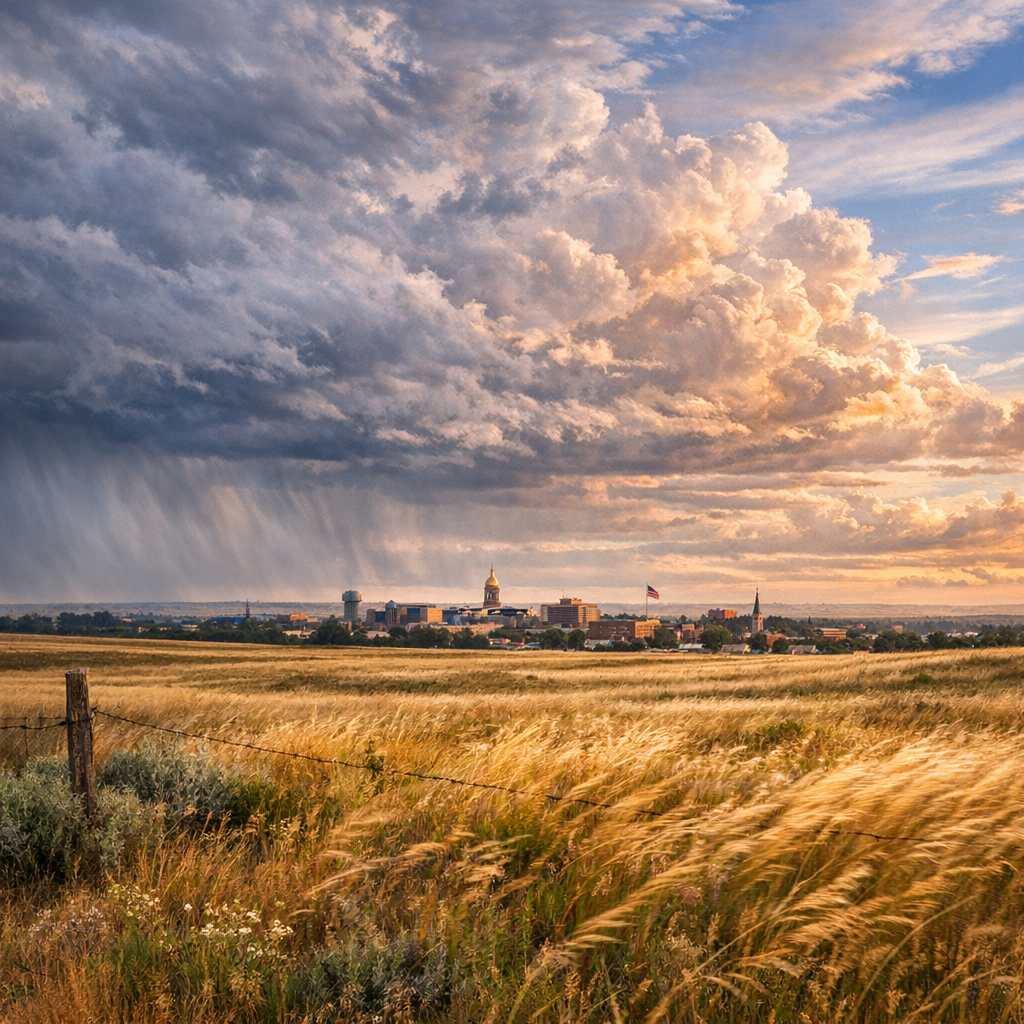
Cheyenne lies at about 6,100 feet elevation on a broad plateau just east of the Rockies. This geography gives the city a cold semi-arid climate: winters are long, snowy, and windy, while summers are warm, generally clear, and dry. The terrain causes strong winds from the west and southwest, especially in winter, and upslope windflow from the east to south can bring fog or low clouds.
Temperature & Growing Season Patterns
Summers typically yield highs in the low 80s°F (around 82-84°F), especially in July. Winters can drop well below freezing at night, with average lows near 15-20°F in January. Daytime highs in winter often hover just under or over freezing. Overall, weather can swing dramatically in short spans, especially during transitional seasons.
The frost-free growing period lasts about 130-135 days—usually from mid-May through late September—though frosts have happened as early as mid-August or as late as mid-June.
Precipitation, Snow, and Precipitation Timing
Rainfall is modest—Cheyenne averages just over 15 inches/year. Most precipitation falls in spring and early summer, often from thunderstorms. Snowfall is more considerable in late winter and spring, with April often being the month with the most snow accumulation. The city’s snow season extends from fall through mid-spring, with snow possible even in May.
Wind, Sunlight, and Seasonal Transitions
Wind is a constant feature—average speeds are highest in winter and early spring, dipping in summer. Chinook effects from the mountains can cause sudden warmups during cold spells. Summer brings long daylight, lower humidity, and clear skies; spring and fall move quickly, with rapid shifts that keep both residents and visitors alert.
Living with the Weather
If you garden, build, or plan outdoor events here, expect late spring frosts and early fall chills. Durable clothing, layered for temperature swings and wind shears, is standard fare. Given summer thunderstorms, safety for sudden hail or heavy rain is a must. Evenings are often cool, so warm items are never far from reach.
What to Learn from Long-Term Trends
While Cheyenne’s general climate has held consistent patterns, shifts in precipitation timing, winter snowfall amounts, and the frequency of extreme temperature swings are observed. Monitoring these changes matters—for water planning, infrastructure, vegetation zones, and outdoor recreation. Communities and residents should keep an eye on local weather reports and climate summaries to plan ahead.
Local weather isn’t just data—it’s part of daily life in the High Plains. Knowing the patterns helps us prepare, adapt, and appreciate the variety.