

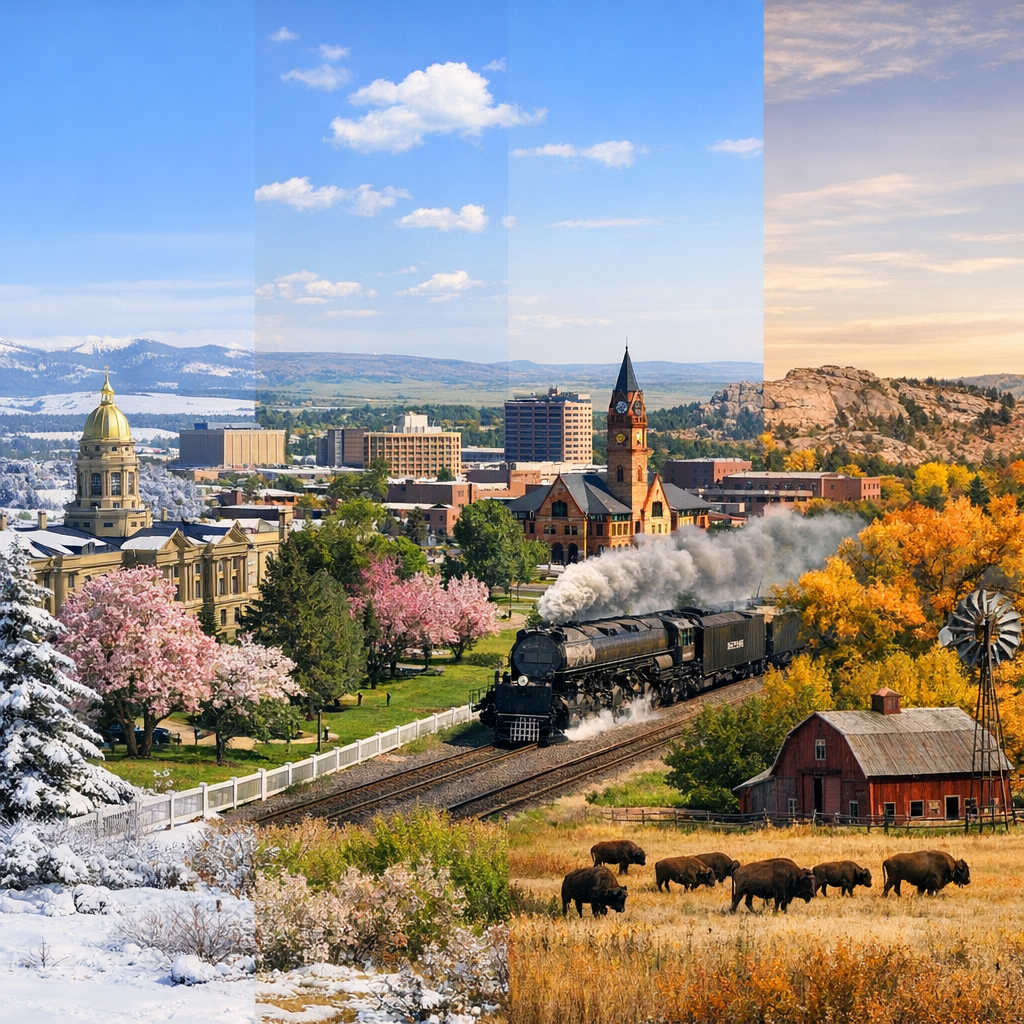
Cheyenne, Wyoming, situated at an elevation of over 6,000 feet, experiences a semi-arid continental climate characterized by distinct seasonal variations. Understanding these patterns is essential for residents and visitors alike.
Winter: Cold and Snowy
Winters in Cheyenne are cold and moderately long, with average temperatures around 27°F (-3°C). Snowfall typically begins in November and continues through March, averaging about 51 inches annually. Despite the cold, periods of Chinook winds can bring temporary warmth, causing rapid snowmelt.
Spring: Transitional and Unpredictable
Spring brings a mix of weather conditions, from lingering snow to warmer days. April and May are among the wettest months, with precipitation averaging 2.4 inches in May. Thunderstorms become more frequent, occasionally bringing hail and strong winds.
Summer: Warm and Sunny
Summers are warm, with average high temperatures in July reaching 82°F (28°C). The city enjoys approximately 236 sunny days per year, making summer ideal for outdoor activities. However, afternoon thunderstorms are common, often accompanied by lightning and brief heavy rains.
Fall: Cool and Crisp
Autumn sees a gradual cooling, with September highs averaging 74°F (23°C). The season is generally dry, providing pleasant conditions before the onset of winter.
Environmental Considerations
Cheyenne’s climate influences local ecosystems and environmental concerns. The semi-arid conditions contribute to wildfire risks, particularly during dry and windy periods. Additionally, the region’s weather patterns affect agriculture, water resources, and wildlife habitats.
By understanding Cheyenne’s climate, residents can better prepare for seasonal changes and contribute to environmental stewardship in our community.