

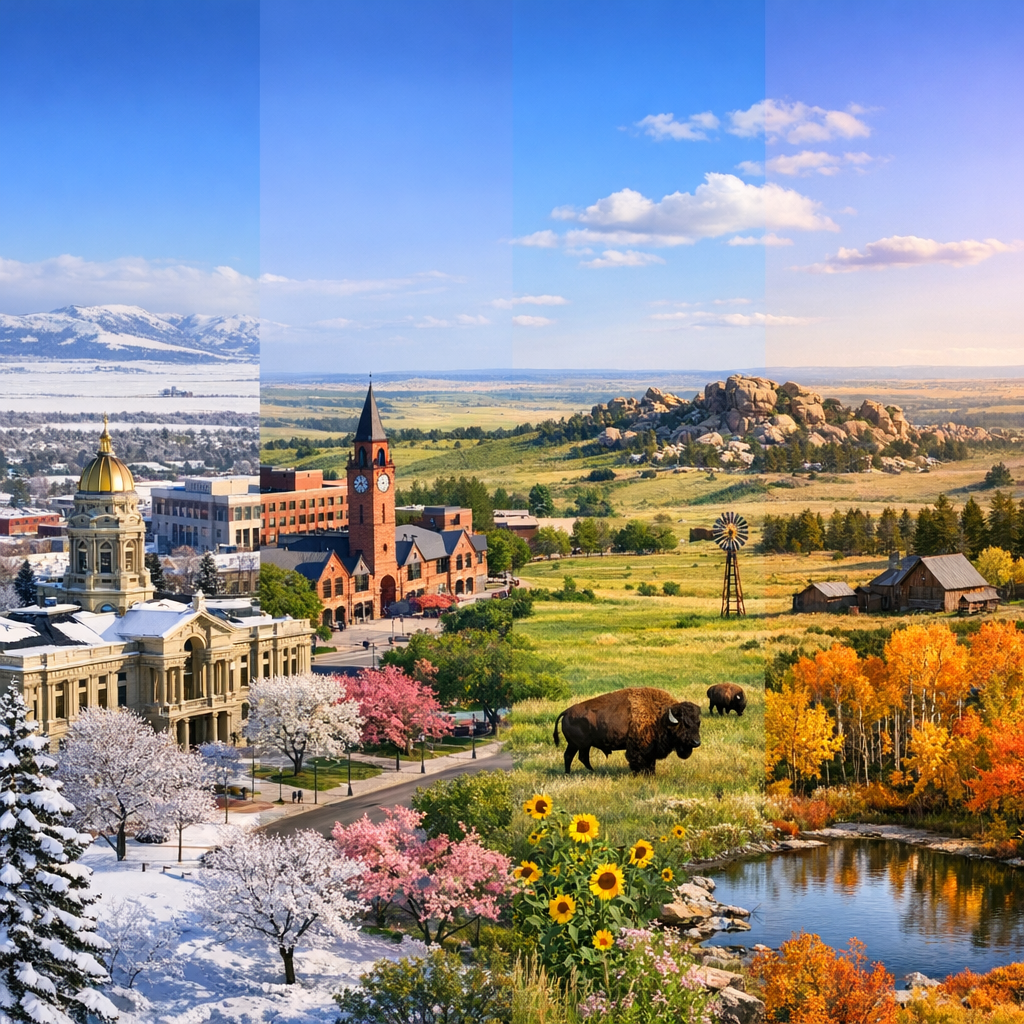
Cheyenne, Wyoming, experiences a cold semi-arid climate, characterized by distinct seasonal variations. Understanding these patterns can help residents prepare for the year’s weather conditions.
Temperature Trends
Winters in Cheyenne are cold, with average low temperatures around 16.7°F (-8.5°C) in January. Summers are warm, with average highs reaching 83.4°F (28.6°C) in July. The temperature can vary significantly, so it’s essential to be prepared for sudden changes.
Precipitation and Snowfall
Cheyenne receives an average annual precipitation of approximately 16.04 inches (407.42 mm). May is typically the wettest month, averaging 2.68 inches (68.07 mm) of rainfall. Snowfall is common during the winter months, with an average annual accumulation of 58 inches (147 cm).
Wind and Sunshine
The city is known for its windy conditions, especially during the winter months. January, for instance, has an average wind speed of 23 mph. Despite the wind, Cheyenne enjoys about 236 sunny days per year, providing ample opportunities for outdoor activities.
Environmental Considerations
Cheyenne’s climate influences local environmental initiatives. The city has developed a Priority Climate Action Plan to identify projects aimed at reducing pollution, creating jobs, and improving residents’ quality of life.
By staying informed about Cheyenne’s climate patterns and participating in local environmental efforts, residents can better adapt to seasonal changes and contribute to the community’s well-being.