

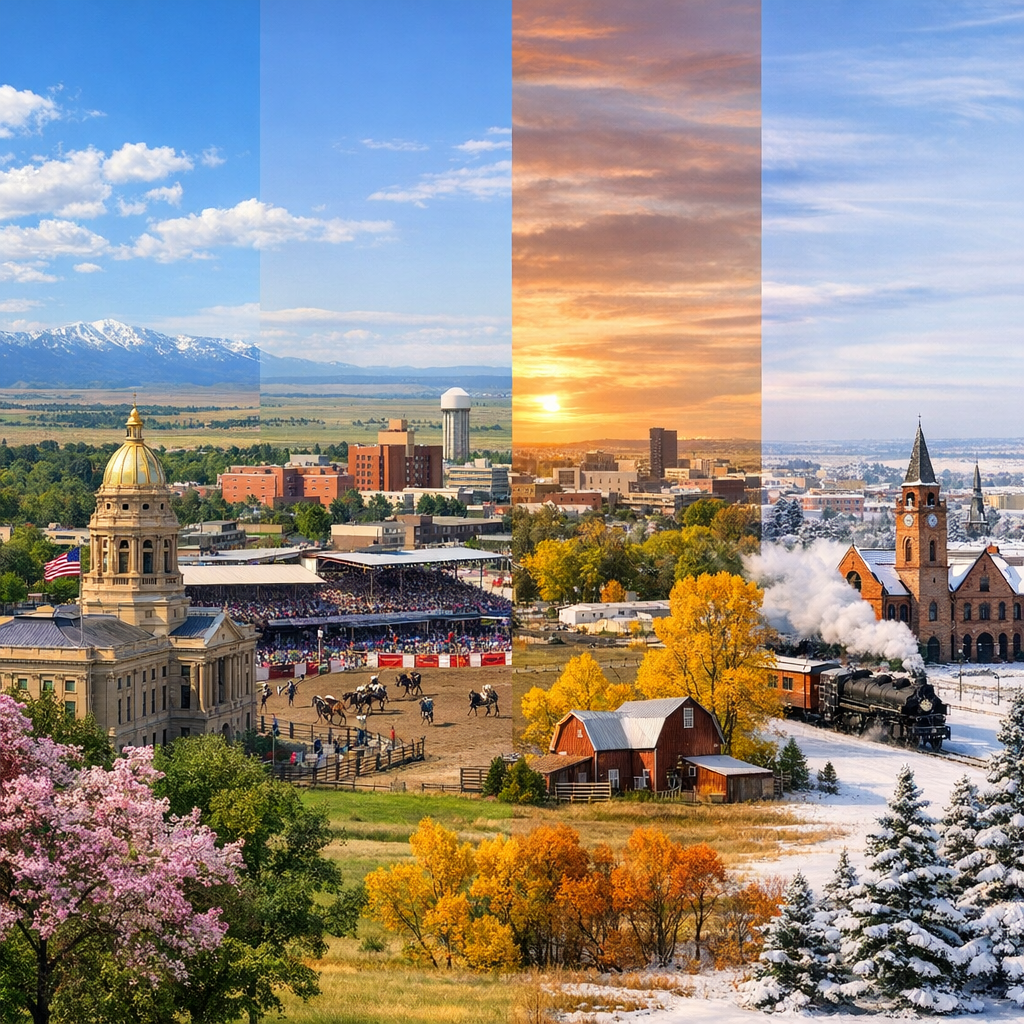
Cheyenne, Wyoming, offers a distinctive climate characterized by its location in the mid-latitude steppe zone. This results in clear seasonal variations, with warm summers and cold winters.
Seasonal Overview
Summer
Summers in Cheyenne are warm and mostly clear. The warm season lasts from June 10 to September 13, with average daily high temperatures above 74°F. July is typically the hottest month, with an average high of 82°F and a low of 57°F. This period is ideal for outdoor activities, thanks to the pleasant temperatures and extended daylight hours.
Winter
Winters are long, freezing, snowy, windy, and partly cloudy. The cold season spans from November 16 to March 8, with average daily high temperatures below 47°F. January is often the coldest month, with average lows around 19°F. Snowfall is common, contributing to the city’s winter landscape.
Precipitation and Humidity
Cheyenne receives an average annual precipitation of approximately 15.04 inches. May is typically the wettest month, averaging 2.40 inches of rainfall. The city also experiences about 58 inches of snowfall annually, with snow typically falling from November through March.
Environmental Considerations
Given its semi-arid climate, Cheyenne faces environmental challenges such as drought conditions and wildfire risks, especially during dry and windy periods. Residents are encouraged to stay informed about local environmental health services and adhere to guidelines to mitigate these risks.
Understanding Cheyenne’s climate patterns enables residents to better prepare for seasonal changes and contribute to the community’s resilience against environmental challenges.