

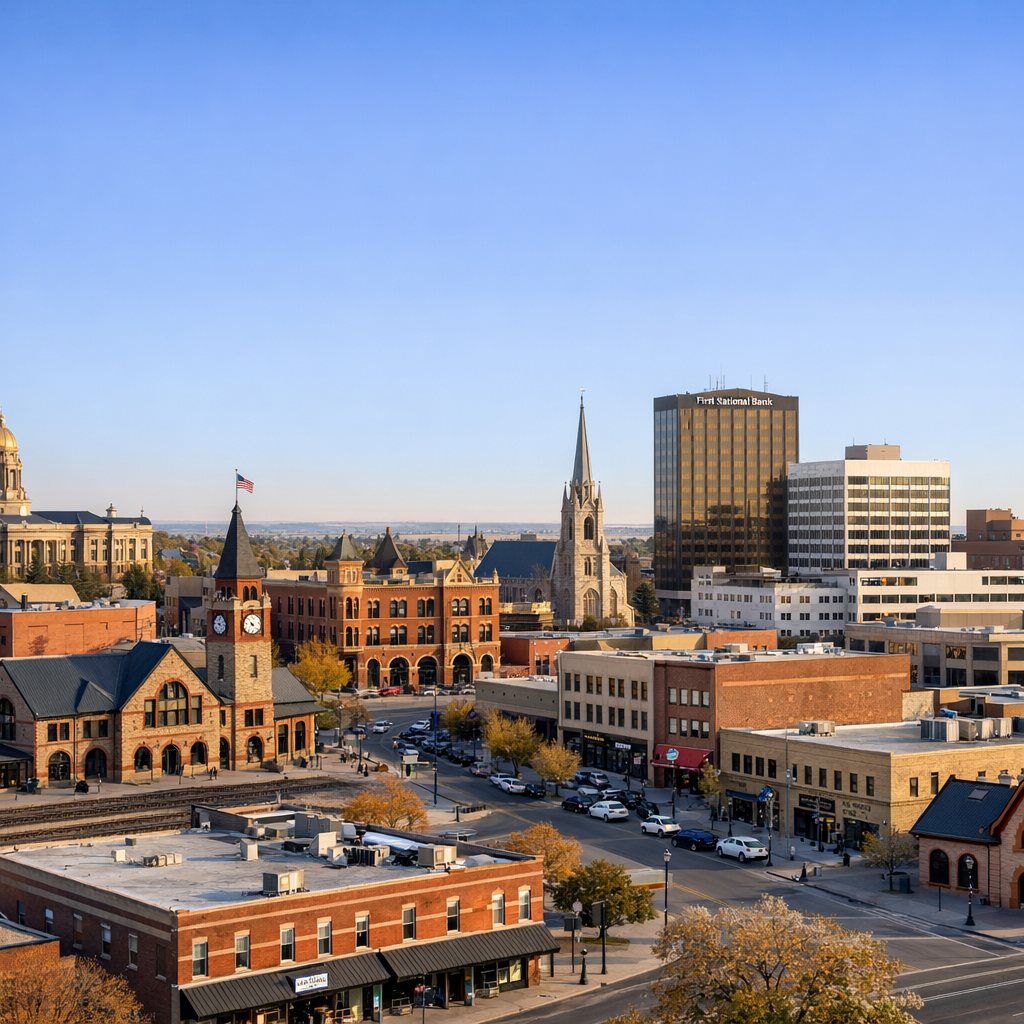
Cheyenne, Wyoming, has experienced significant economic developments in recent years, reflecting both growth and challenges. As the state’s capital and largest city, Cheyenne’s economic landscape is shaped by various factors, including population trends, housing market dynamics, and major business initiatives.
Population and Economic Growth
As of 2026, Cheyenne’s population is estimated at approximately 66,580 residents, marking a steady increase from previous years. This growth contributes to a vibrant local economy, with a median household income of $78,839 and a median age of 38.9 years. The city’s demographic composition includes a majority White population (74%), followed by Hispanic (16.8%) and individuals identifying with two or more races (3.8%).
Housing Market Trends
The housing market in Cheyenne has shown resilience and growth. Over the three months ending May 2026, home prices increased by 4.0% compared to the same period the previous year, with a median sale price of $369,279. Homes are selling faster, averaging 25 days on the market, down from 28 days the previous year. However, the number of homes sold decreased slightly, with 342 homes sold in May 2026 compared to 355 the previous year.
Major Business Developments
Several significant business initiatives are shaping Cheyenne’s economic future:
ProRodeo Cowboys Association Relocation
The Professional Rodeo Cowboys Association (PRCA) has announced plans to relocate its national headquarters, the ProRodeo Hall of Fame, and the Museum of the American Cowboy to Cheyenne. This move is expected to bring substantial economic benefits, including the creation of 368 construction-related jobs and 140 permanent positions. By its 10th year, the ProRodeo Hall of Fame alone is projected to generate an annual economic impact of $12 million.
Data Center Expansion
Cheyenne is becoming a hub for data centers, with plans for a new artificial intelligence data center estimated to use 1.8 gigawatts of power, more than the combined usage of all homes in Wyoming. This development is anticipated to provide tax revenue and quality jobs, further diversifying the local economy. However, concerns have been raised about potential impacts on water use and property values, leading to discussions about zoning and community input.
Entertainment Districts Initiative
The City of Cheyenne is considering ordinances to establish entertainment corridors, aiming to attract both locals and visitors. Proposed areas include the 15th Street corridor, West Lincolnway, and the I-25 High Plains Interchange to Swan Ranch. These initiatives seek to integrate entertainment businesses into the community while addressing potential impacts through public input and regulatory measures.
Conclusion
Cheyenne’s economic landscape is evolving, marked by population growth, a dynamic housing market, and significant business developments. While these changes present opportunities for economic diversification and growth, they also pose challenges that require careful planning and community engagement to ensure sustainable and inclusive development.