

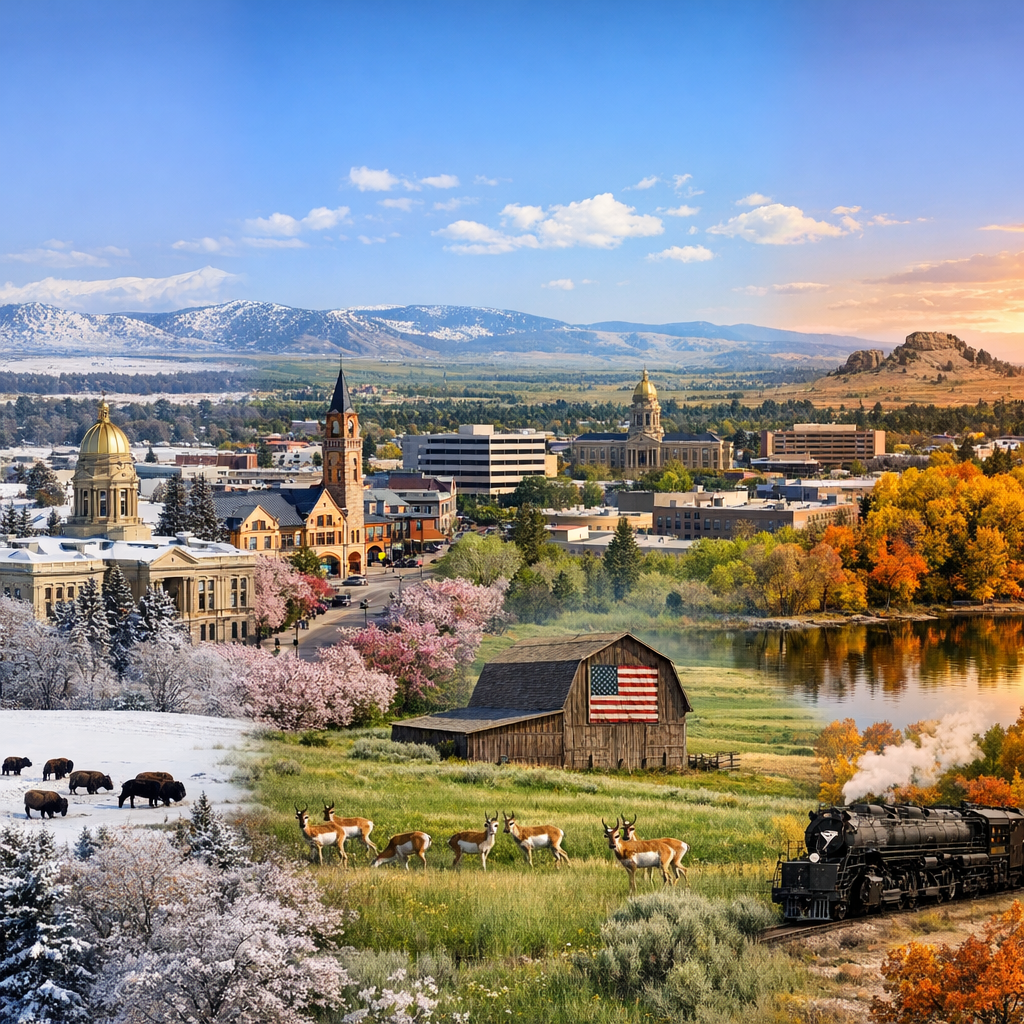
Cheyenne, Wyoming, offers a distinctive climate characterized by its location in the mid-latitude steppe zone, classified as BSk by the Köppen climate system. This classification indicates a cold semi-arid climate, marked by significant seasonal variations and relatively low annual precipitation.
Seasonal Temperature Variations
Residents experience a clear differentiation between seasons. Summers, typically from June to September, are warm and mostly clear, with average high temperatures peaking around 82°F (28°C) in July. Winters, spanning from November to March, are long and cold, with average low temperatures dropping to approximately 19°F (-7°C) in January. It’s noteworthy that temperatures can occasionally dip below 0°F (-18°C) during the coldest months.
Precipitation and Snowfall
Cheyenne receives an average annual precipitation of about 15.1 inches (384 mm), with May being the wettest month, averaging 2.68 inches (68 mm) of rainfall. Snowfall is a significant component of the city’s precipitation, averaging 58 inches (147 cm) annually. Snow typically begins in November and can continue through March, contributing to the city’s winter landscape.
Wind and Sunshine
Wind is a prominent feature of Cheyenne’s climate, with average wind speeds around 18 mph (29 km/h). The city enjoys approximately 236 sunny days per year, providing ample opportunities for outdoor activities during the warmer months.
Environmental Considerations
Given the semi-arid climate, water conservation is essential. Residents are encouraged to adopt water-saving practices, especially during the drier months. Additionally, the region’s susceptibility to wildfires necessitates awareness and preparedness, particularly during periods of low humidity and high winds.
Understanding these climatic patterns enables residents to better prepare for and adapt to the diverse weather conditions that define life in Cheyenne.