

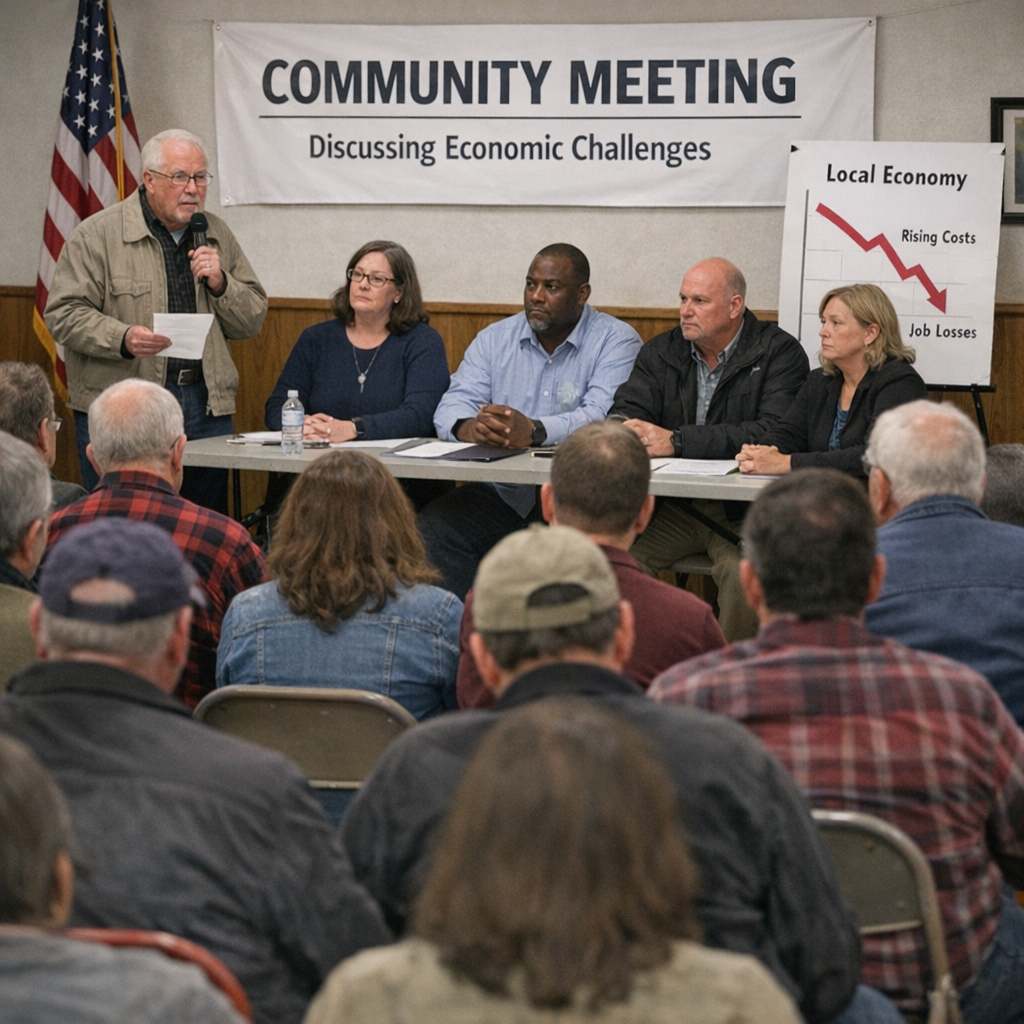
As the nation grapples with economic challenges, including rising inflation and fluctuating gas prices, communities across the United States are feeling the effects. Recent reports indicate that inflation surged to 3.8% in April, driven in part by ongoing international conflicts affecting energy markets. This has led to gas prices exceeding $4.50 per gallon, placing a strain on household budgets.
In response to these economic pressures, the federal government has implemented measures aimed at stabilizing the economy. The administration emphasizes tax cuts, deregulation, and energy independence as key strategies to address inflation and promote growth.
For local communities, these national trends translate into tangible challenges. Small businesses, for instance, are experiencing decreased consumer spending and increased operational costs. To navigate this period of uncertainty, it’s crucial for community members to stay informed about economic developments and consider strategies such as supporting local businesses, exploring energy-efficient practices to mitigate rising utility costs, and participating in community initiatives aimed at economic resilience.
By fostering a spirit of collaboration and adaptability, communities can work together to weather the current economic climate and emerge stronger in the face of national challenges.